For-hire carriers
The primary BOF audience: dispatch teams keep load activity moving while BOF shows document gaps, driver status, carrier eligibility, HR/finance follow-up, and release decisions before the day gets noisy.
 Sign In
Fleet operating layer
BOF is built for trucking teams that need driver readiness, carrier packets, documents, settlement holds, claims evidence, HR and finance follow-up, owner decisions, and handoff notes to agree before work is released.

Where BOF fits
BOF helps the team answer the readiness question that still matters: can we trust the driver, carrier, documents, exceptions, office follow-up, and release record enough to act?
The primary BOF audience: dispatch teams keep load activity moving while BOF shows document gaps, driver status, carrier eligibility, HR/finance follow-up, and release decisions before the day gets noisy.
Branches, yards, and operating boards get one standard BOF record for policy, exceptions, owners, and release confidence around the load system.
Open private fleet pathAudit-ready records, safety checks, credential dates, and dispatch gates stay organized without making the TMS the compliance source of truth.
Open government pathOperations with BOLs, delivery proof, claim evidence, safety reviews, and settlement holds get cleaner release control without a dense file cabinet.
Open settlements pathAI-assisted operations support
AI-assisted review supports BOF by reading for missing packet details, expired dates, incomplete fields, repeated exception patterns, and likely follow-up owners. BOF turns that faster triage into a human-reviewed readiness answer and service workflow with evidence attached.
Find the missing proof, unreadable upload, unsigned form, or date problem before it becomes a dispatch delay.
Surface the blocker, owner, and next action so managers do not waste time rebuilding the queue by hand.
AI supports BOF's managed follow-up: faster first pass, clearer escalation, and a cleaner record for the fleet.
Release decisions remain BOF-reviewed and manager-readable, with documents, audit notes, and consequences attached.
Operating answer
It is the readiness and service layer for fleets that need documents, drivers, carriers, exceptions, HR/finance follow-up, and leadership decisions to line up before someone releases work into the field.
Fleet owners, operations leads, dispatchers, document owners, and safety/compliance managers who need the same operating answer.
Open safety pathWhat can move, what is blocked, who owns the fix, which document supports the decision, and what happens next.
The fleet's existing tools can keep the load context while BOF keeps the readiness record, exception owner, and release decision defensible.
Start with one fleet record and enter the guided path with enough detail to make the conversation real.
Managed work in view
BOF supports the daily handoffs between field proof, carrier readiness, safety reviews, and follow-up ownership.
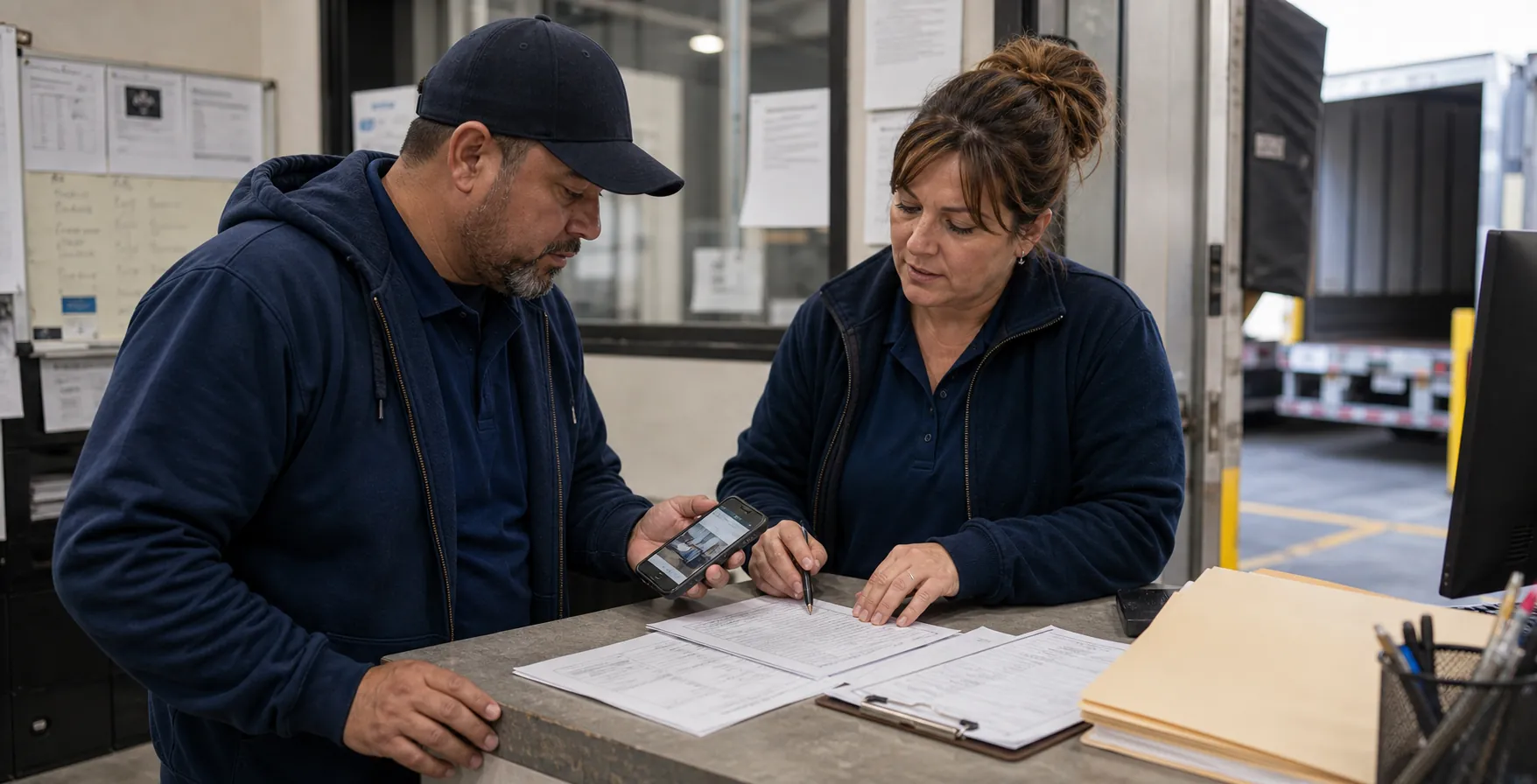
POD, BOL, and phone evidence are compared before the record closes.

Internal lanes still need visible status, owner, and consequence.

Higher-scrutiny work needs clean packet ownership and review history.
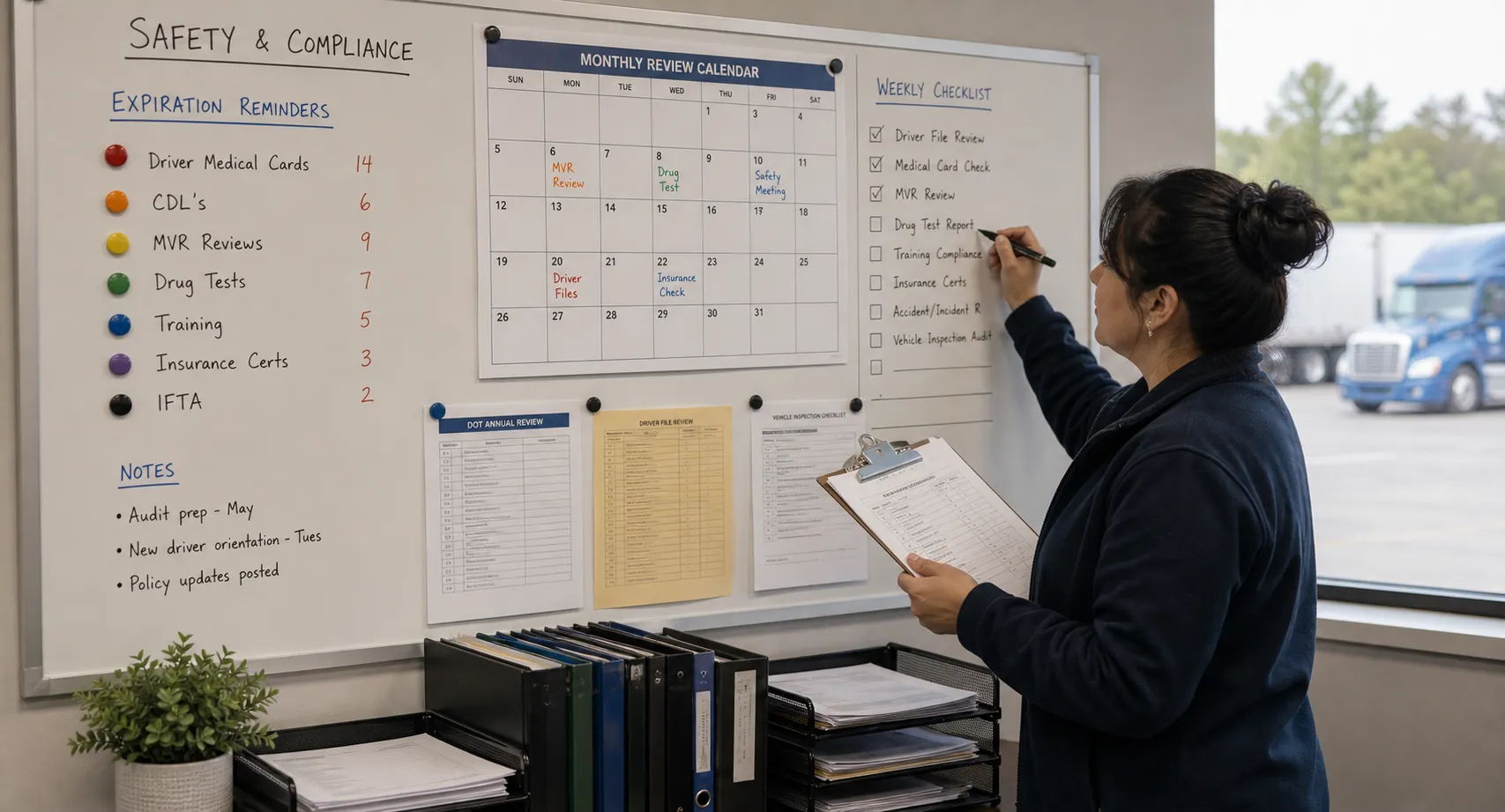
Expirations and reviews become visible work, not a hidden spreadsheet.
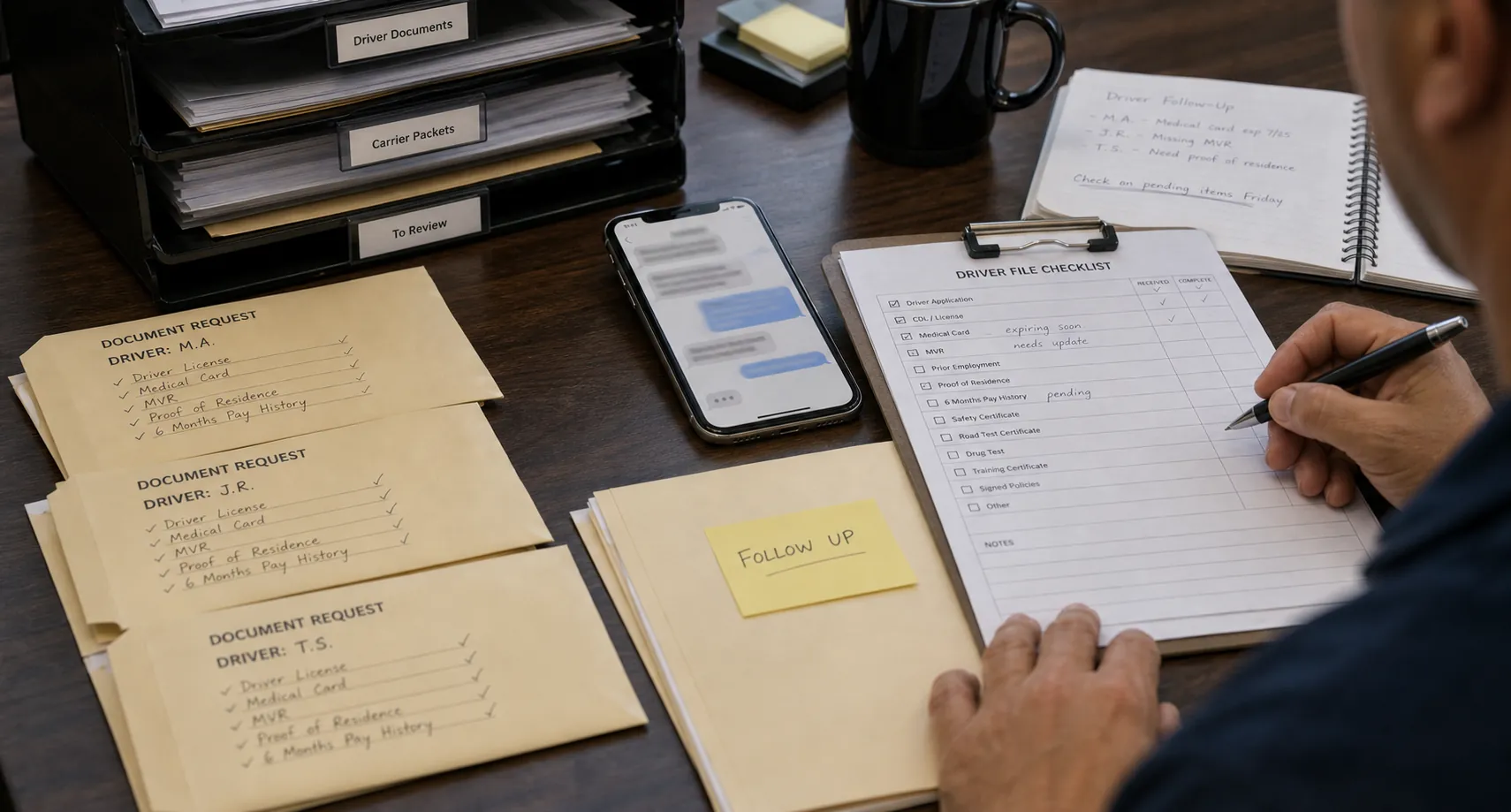
Requested, received, reviewed, and approved states stay trackable.

Managers see the blocker and next action instead of rebuilding it manually.
Next step
Bring one load, driver file, document packet, carrier question, or release problem, then inspect the records that decide what happens next.